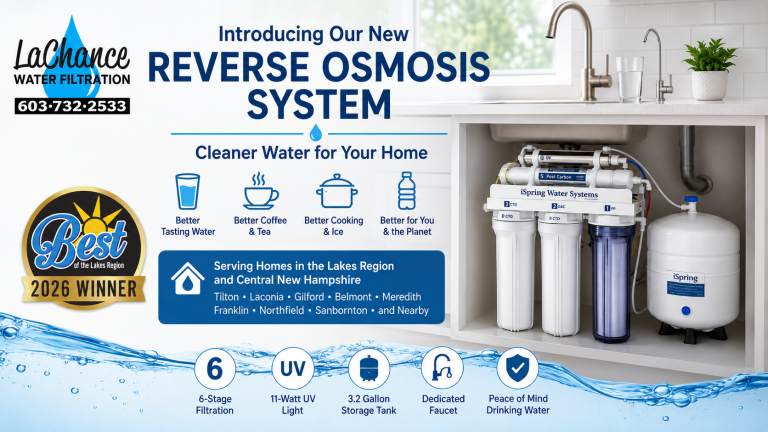
Why an RO System With Remineralization Is the Best Choice for Lakes Region NH Homes
If you live in the Lakes Region of New Hampshire, you know the water can change almost as fast as the seasons. Snowmelt in early spring can stir up sediment. A dry August stretch can concentrate minerals. Heavy rain in September can shift groundwater chemistry overnight. Homeowners in towns such as Meredith, Gilford, Moultonborough, Laconia, and Center Harbor witness these changes firsthand.
Many families in the Lakes Region choose reverse osmosis for its dependable access to clean, delicious water straight from their kitchen sink. By adding a remineralization cartridge, you elevate your water experience even further! This combination delivers consistently refreshing water that’s not only great-tasting but also safer than typical options. Enjoy peace of mind while savoring every sip!
How Reverse Osmosis Works
Reverse osmosis, or RO, pushes water through an extremely fine membrane. The pores are so small that only pure water molecules can pass through. Everything else, contaminants, dissolved solids, minerals, is separated and flushed away.
Most RO systems include:
- A pre-filter for sediment and chlorine
- A membrane for deep purification
- A post-filter for improved taste
- Optional remineralization for the finishing touch
Because of this multi-stage approach, RO systems work well for Lakes Region well water, where conditions can shift rapidly with changes in weather and groundwater movement.
What an RO System Removes
RO systems are known for their broad removal capabilities. When set up correctly, an RO system can reduce or remove:
- Arsenic, which is a prevalent problem in many wells across New Hampshire, posing serious health risks.
- Lead, which can leach from outdated plumbing systems or fixtures, contaminating drinking water.
- PFAS (per- and polyfluoroalkyl substances), notorious for their resilience against traditional filtration methods, and known for their environmental persistence.
- Nitrates and nitrites, which can originate from agricultural runoff and wastewater, threatening both human health and aquatic ecosystems.
- Sodium, often found in water supplies and can be a concern for individuals on low-sodium diets.
- VOCs (volatile organic compounds), which may enter the water supply through industrial processes or leaky landfills, potentially leading to serious health effects.
- Organic matter, influenced by seasonal runoff, which can affect the taste and quality of water.
- Iron and manganese, which can be effectively removed with the appropriate pre-filtration methods in place to safeguard the membrane.
As for biological contaminants, such as bacteria and viruses, RO membranes effectively block most of them due to their pore size. However, it’s important to note that manufacturers often recommend a UV sterilizer for complete biological protection. This prevents organisms from growing inside the filter housing, especially in untreated well systems.
The bottom line is that RO systems provide an exceptional level of purification. With the right supporting components, they handle nearly everything the Lakes Region can throw at them.
Does an RO System Really Remove Everything
Yes—RO removes almost all dissolved content, including beneficial minerals like calcium and magnesium. Some homeowners worry about this, but the removal itself isn’t harmful. Water isn’t meant to be your primary source of nutrients.
That said, minerals in drinking water are highly bioavailable. Research shows that they can account for approximately 8 to 16 percent of a person’s daily calcium or magnesium intake, depending on the water source. The catch is consistency. In the Lakes Region, mineral levels fluctuate with the seasons, rainfall, and groundwater movement. One month, you might get a slight boost; another month, next to nothing. While minerals in water can be beneficial, they don’t provide a dependable nutritional contribution—especially in fluctuating well conditions.
The Truth About Minerals in Water
Calcium and magnesium contribute to taste and help maintain a balanced pH. These minerals are part of what people describe as “good-tasting water.” But in the Lakes Region, the natural levels shift constantly. Snowmelt, drought, and seasonal turnover in lakes and groundwater all influence how much mineral content ends up in your well.
That’s why water should not be relied upon as a primary source of nutrition. A balanced diet and proper supplements provide predictable, measurable amounts of calcium, magnesium, and other minerals. Water needs to taste pleasant and feel refreshing.
This context is essential because remineralization isn’t designed for nutrition. It’s intended to enhance taste, mouthfeel, and pH balance, while allowing the RO system to handle the primary purification task.
Why Remineralization Makes RO Safer Than Standard
A remineralization cartridge reintroduces controlled amounts of calcium and magnesium back into the purified RO water. These small amounts help the water taste smoother and less acidic. Many Lakes Region homeowners say it reminds them of fresh spring water.
The benefit here is consistency. Even when your well water fluctuates seasonally, the remineralization cartridge consistently adds the same amount of minerals every time. The result is pure, clean, dependable drinking water with excellent flavor. This combination, deep purification plus improved drinkability, is what LaChance calls safer than standard.
Why You Should Not Rely on Water for Minerals
Even though minerals in water are easily absorbed, they vary too much in untreated well water to be counted on. A spring thaw or a prolonged dry spell can change your mineral levels dramatically. Supplements and food give you reliable numbers; water doesn’t.
With remineralized RO water, the focus is not on nutrition. It’s consistency. Its taste. It’s the peace of mind that what you’re drinking is the same every day, no matter what the weather did yesterday.
RO Systems vs Standard Filters
Basic under-sink filters do a good job of improving taste and reducing chlorine, but they don’t handle the full scope of contaminants found in many wells in the Lakes Region. They also don’t offer the same protection when runoff, rainstorms, or seasonal shifts disrupt water chemistry.
RO systems step in where standard filters leave off. They reduce far more contaminants, produce better-tasting water, and, when paired with remineralization, deliver that clean, balanced drinking experience many families want.
Why LaChance Water Filtration Uses the Safer Than Standard Approach
LaChance Water Filtration works exclusively in the Lakes Region and surrounding New Hampshire towns. That matters because water here is unique. You have drilled wells into bedrock, dug shallow wells, and explored lake-influenced groundwater systems that fluctuate with the seasons.
LaChance understands these shifts. Their systems are designed with local water chemistry in mind, rather than generic national templates. They also use high-quality components, thorough water testing, and provide responsive maintenance—the kind of service homeowners appreciate when dealing with unpredictable Northeast water.
Benefits for Lakes Region Homeowners
- Better tasting coffee, tea, soups, and cooking water
- Reliable water quality through every season
- Protection from organic surges during snowmelt
- Reduced mineral concentration during summer droughts
- Stable taste even when lake levels rise and fall
- Less reliance on bottled water
- Peace of mind for families, seniors, and children
Expanded FAQs About RO and Remineralization
- Q: Does a RO system really remove everything from the water?
- A: RO removes nearly all dissolved contaminants, including minerals. For biological safety, an added UV light is recommended, especially for untreated wells.
- Q: If minerals are removed, why add them back
- A: Calcium and magnesium improve taste and balance the pH of RO water. The remineralization cartridge provides a consistent amount, something natural well water cannot guarantee.
- Q: Are minerals in water good for me?
- A: Yes, they are bioavailable. But their levels in Lakes Region wells fluctuate too widely to serve as a dependable nutritional source.
- Q: How does seasonal change affect my water?
- A: Spring thaw brings sediment and organics. Summer drought increases mineral concentration. Heavy fall rains dilute and stir up groundwater. RO smooths out these ups and downs.
- Q: Will RO water taste flat without minerals?
- A: It can. That’s why remineralization is popular. It restores a lively, refreshing taste.
- Q: Do I need extra components with my RO system?
- A: If you’re on a private well, pre-filtration is essential for iron and manganese. A UV sterilizer is recommended if biological contaminants are possible.
- Q: How often do RO filters need to be replaced?
- A: Typically, this includes pre-filters once a year, the membrane every 2 to 5 years, and the remineralization cartridge yearly. LaChance offers scheduled maintenance.
- Q: Can RO systems remove PFAS?
- A: Yes. RO is one of the most effective household treatments for PFAS reduction.
- Q: Is RO suitable for homes with infants or seniors?
- A: Yes. It provides clean, consistent water that reduces exposure risks from changing well conditions.
- Q: Does LaChance handle installation and service?
- A: Yes. LaChance Water Filtration handles testing, installation, maintenance, and system monitoring for homeowners in the Lakes Region.
Water in the Lakes Region isn’t always predictable. But your drinking water can be. A remineralized RO system brings consistency to an area where the water quality fluctuates as often as the weather. LaChance Water Filtration’s safer-than-standard approach delivers purified, great-tasting, and reliable drinking water, designed explicitly for Lakes Region homes.